

|

RECOMENDACIONES ESPECIFICAS PARA CIUDADANOS ARGENTINOS EN EMIRATOS ÁRABES UNIDOS

A la fecha se recomienda permanecer en sus domicilios/hoteles o lugar seguro estipulado por las autoridades locales hasta nuevo aviso y mantenerse alejados de instalaciones militares en los EAU

Permanecer alerta y acatar  las instrucciones de autoridades y sistemas de alerta locales a través de comunicaciones oficiales de las autoridades emiratíes por todos los medios oficiales posibles tales como la Agencia WAM de noticias, las Policías de Abu Dhabi y Dubai y el Ministerio del Interior y de Defensa de los EAU

Contar con pasaporte vigente y en buenas condiciones, así como toda otra documentación necesaria para viajar o identificarse (venia de viaje y partidas de nacimiento o libro de familia, DNI, libreta de casamiento)

En caso único y exclusivo de verse su integridad física afectada/comprometida comunicarse al teléfono de guardia de emergencia consular de esta Embajada.

RECOMENDACIONES ESPECIFICAS PARA CIUDADANOS ARGENTINOS QUE PREVEAN VIAJES/TRÁNSITO EN LOS EMIRATOS ÁRABES UNIDOS

Se recomienda NO realizar viajes no esenciales o de turismo a los Emiratos Árabes Unidos y postergarlos hasta nuevo aviso cuando la situación regional se haya estabilizado y solicita especialmente evitar el tránsito por los Aeropuertos Internacionales de esta jurisdicción atento restricciones del espacio aéreo local y dinámicas disrupciones/cancelaciones de vuelos comerciales internacionales.

En caso de tener programados vuelos deberán comunicarse directamente con las aerolíneas y seguir estrictamente las alertas de viaje de los Aeropuertos Internacionales correspondientes ante la la situación dinámica del espacio aéreo en la región.

De encontrarse de visita por turismo o por viaje no esencial, se recomienda enfáticamente abandonar esta jurisdicción cuando la situación y el tráfico aéreo lo permita.

RECOMENDACIONES ADICIONALES A LA COMUNIDAD ARGENTINA RESIDENTE EN LOS EAU Y CIUDADANOS ARGENTINOS EN LA JURISDICCIÓN

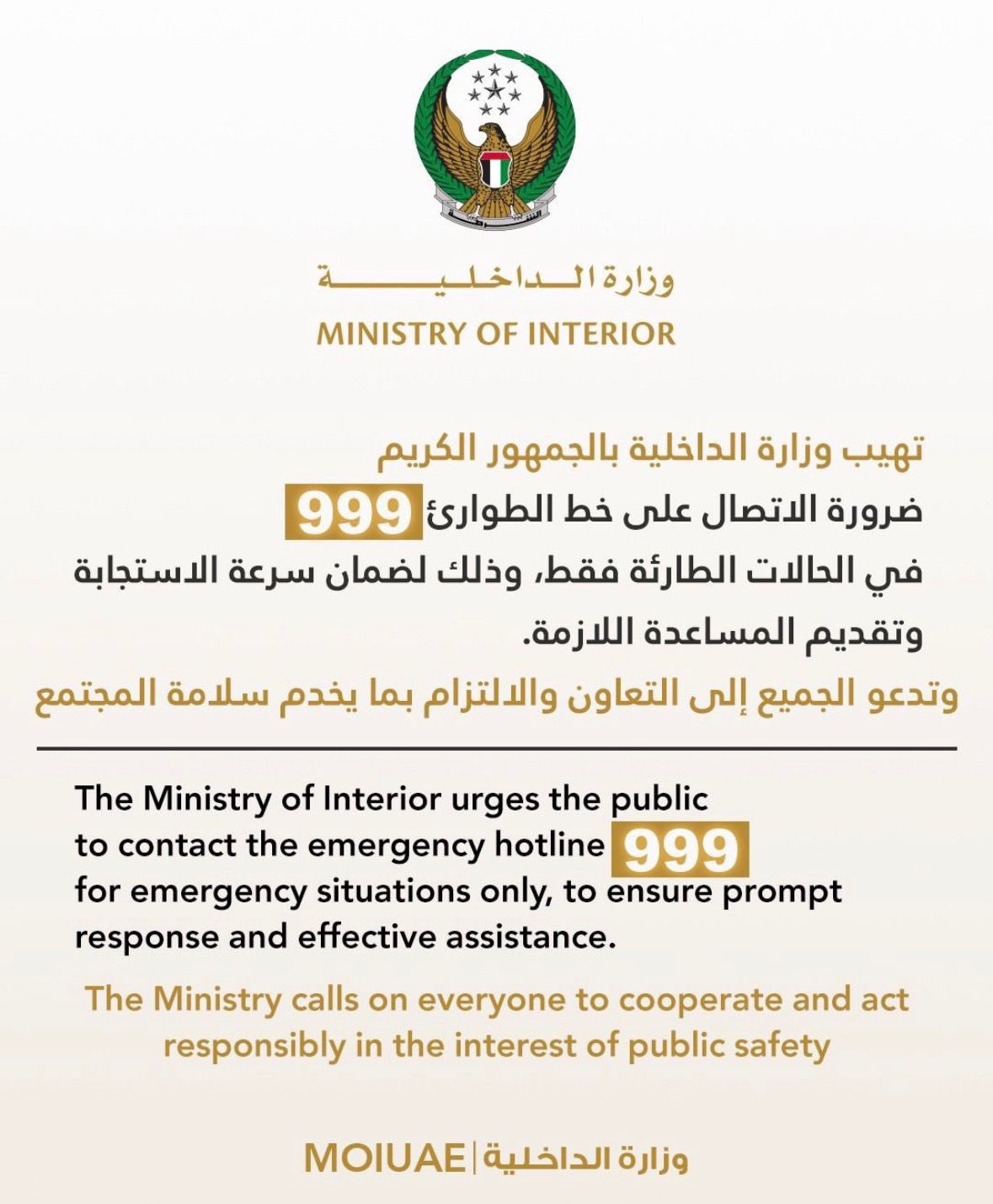
  1. El Ministerio del Interior de los EAU urge a todos los ciudadanos, residentes extranjeros y visitantes en esta jurisdicción contactarse al número de guardia 999 para casos de afectación/emergencia de integridad física únicamente, a efectos de dar pronta respuesta de la autoridad emiratí competente en terreno.
  2. La Fiscalía Pública de los Emiratos Árabes Unidos (EAU) advierte a los ciudadanos, residentes extranjeros y visitantes en esta jurisdicción sobre las consecuencias legales de publicar o circular rumores e información de fuentes desconocidas o información no corroborada o falsa (fake news) a través de plataformas de redes sociales o cualquier otro medio tecnológico, debido a las consecuencias de los mismos, incluida la propagación de confusión y el daño a la seguridad y estabilidad de los EAU.

La Fiscalía reitera la necesidad de obtener información únicamente de fuentes oficiales y acreditadas, y abstenerse de dejarse influenciar por el contenido que se publica o circula sin verificación.

Cualquier persona que comparta o reenvíe contenido de fuentes desconocidas estará sujeta a responsabilidad legal de acuerdo con la legislación aplicable, incluso si no es el creador original de dicho contenido, tal la información indicada por dicho organismo.

SE SOLICITA LA COLABORACIÓN DE LOS CIUDADANOS ARGENTINOS EN LA JURISDICCIÓN DE ABSTENERSE A PRESTARSE A ESTE TIPO DE PRÁCTICAS, POR LA SEGURIDAD Y BIENESTAR DE QUIENES SE ENCUENTRAN EN LA CIRCUNSCRIPCIÓN.

Emergency hotline 999
REGRESAR

The Question of the Malvinas Islands

The Question of the Malvinas Islands, understood as being the sovereignty dispute between Argentina and the United Kingdom over the Malvinas, South Georgias and South Sandwich Islands and the surrounding maritime spaces, originated on 3 January 1833, when the United Kingdom disrupted Argentina’s territorial integrity by illegally occupying the islands and evicting the Argentine authorities, preventing their return and the settlement of Argentines from the mainland. Since then, Argentina has consistently denounced the United Kingdom’s usurpation and, as it is provided for in the Argentine Constitution, has ratified its sovereignty over the islands and affirmed that its recovery in accordance with international law constitutes a permanent and unrelinquished goal.

The United Nations has characterized the Question of the Malvinas Islands as a special and particular colonial case involving a sovereignty dispute between the Argentine Republic and the United Kingdom of Great Britain and Northern Ireland which should be settled by means of negotiations between the two parties. The Organization of American States, for its part, has also made statements to that effect.

Moreover, Argentina enjoys the full support of the countries of Latin America and the Caribbean, as well as of the 54 African countries, in claiming its legitimate rights to sovereignty over the Malvinas, South Georgias and South Sandwich Islands and the surrounding maritime areas, as well as the solidarity of countries from other regions, which support the resumption of the negotiations between the two parties with a view to reaching a peaceful and definitive settlement in the dispute.

The Argentine Government intends to recover the islands peacefully, in accordance with the principles of International Law, and bearing in mind the interests of the inhabitants. Nevertheless, despite the permanent desire for dialogue of the Argentine Government, the United Kingdom has ignored all calls made by the international community to resume sovereignty negotiations, and exacerbates the situation by conducting a series of unilateral activities, which include the exploration and exploitation of renewable and non-renewable natural resources, as well as holding military exercises there.

History

The Question of the Malvinas Islands in International Organizations and other Regional and Bi-regional Fora

Situation of the Provisional Understandings

Publication

Malvinas Islands: Argentina reaffirms its rights of sovereignty and reiterates its call for dialogue 183 years since the British usurpation.


Updated date: 07/01/2016